


Swimmer's Stain on Teeth: What Parents Should Know

Swimming is a wonderful activity for children. Whether your child enjoys weekend trips to the pool, takes swimming lessons, or spends hours practicing with a competitive swim team, swimming provides exercise, builds confidence, and encourages healthy habits.
But did you know that spending a lot of time in swimming pools can sometimes affect your child's teeth?
If you've noticed yellow, brown, or even greenish discoloration on your child's teeth after swim season, you may be seeing something known as swimmer's stain.

At Agape Pediatric Dentistry in Peachtree Corners, GA, we believe that understanding how everyday activities affect your child's oral health is an important part of prevention. Let's explore what swimmer's stain is, why it happens, and how you can help protect your child's smile without giving up the pool activities they love.
What Causes Swimmer's Stain on Teeth?
Swimmer's stain is a type of tooth discoloration associated with frequent exposure to chemically treated swimming pool water. It typically appears as yellowish-brown or dark-brown deposits on the surface of the teeth, often affecting the front teeth.
Sometimes called swimmer's calculus, these deposits can develop in children, teens, and adults who spend significant amounts of time in swimming pools.
The staining may look like:
Yellow or brown discoloration along the front teeth
Dark deposits near the gumline or between teeth
Stains that don't disappear with regular brushing
Occasionally, greenish discoloration associated with certain types of surface staining
Unlike an ordinary food stain that may gradually disappear with good brushing habits, swimmer's stain can become attached to hardened deposits on the teeth and may require a professional dental cleaning.
Although swimmer's stain is most often associated with competitive swimmers, recreational swimmers who spend many hours in the pool may also develop it.
Why Does Swimming Pool Water Stain Teeth?
Several factors can contribute to tooth discoloration in frequent swimmers.

1. Pool Chemicals Can Interact With Saliva and Tooth Deposits
Swimming pools are treated with chlorine and other disinfectants to keep the water safe.
When pool water repeatedly comes into contact with the teeth, its chemical composition can interact with proteins in saliva and the thin natural film that covers tooth enamel.
Over time, these interactions may contribute to deposits that collect on the surface of the teeth and become discolored.
Research has documented yellowish-brown and dark-brown staining among frequent swimmers, particularly those who train for extended periods.
2. Minerals and Metals May Contribute to Discoloration
Certain minerals and metals, including iron and copper, can contribute to external tooth staining under some conditions.
The composition of swimming pool water varies, depending on the water source, chemical treatments, and maintenance practices.
Although not every case of swimmer's stain is caused by metals, mineral exposure may be one factor worth considering when unusual discoloration appears.
3. Frequent Swimming Increases Exposure
The more time your child's teeth spend in contact with pool water, the greater the opportunity for deposits and staining to develop.
Children who practice with swim teams several days a week may have more exposure than children who occasionally swim for recreation.
However, not every frequent swimmer develops stains. Pool conditions, individual oral health, and other factors can influence the outcome.
Can Chlorine Damage Your Child's Tooth Enamel?
Properly maintained swimming pools are not expected to routinely damage healthy tooth enamel. However, prolonged exposure to poorly balanced pool water may increase the risk of dental erosion.
To understand why, it helps to know what enamel does.
Tooth enamel is the hard, protective outer layer of your child's teeth. It helps shield the more sensitive inner layers from everyday wear, acids, and bacteria.
When enamel is repeatedly exposed to sufficiently acidic conditions, minerals can be lost from its surface.
This process is called dental erosion.

Why Pool Water pH Matters
The pH level measures how acidic or alkaline water is.
According to the Centers for Disease Control and Prevention (CDC), swimming pool water should generally be maintained at a pH between 7.0 and 7.8.
When a pool is not properly maintained and the water becomes excessively acidic, prolonged exposure can place tooth enamel at risk.
Research involving competitive swimmers has identified dental erosion associated with swimming pool water, including cases involving severely acidic water.
It's important to understand that tooth staining and enamel erosion are different problems.
Stains generally involve discoloration or deposits on the tooth surface. Erosion involves the actual loss of tooth enamel, which does not grow back.
Signs of Possible Enamel Erosion
Parents should pay attention if their child develops:
Teeth that suddenly appear dull or less glossy
Increased sensitivity to cold foods or drinks
Teeth that feel unusually rough
Changes in tooth shape or appearance
Unexplained yellowing or other persistent discoloration
These signs can have several causes beyond swimming. A pediatric dental examination is the best way to determine what is happening.
Does Swimming Cause Dry Mouth?
Some swimmers experience temporary mouth dryness, especially when breathing through their mouths during extended exercise.
Saliva plays an important role in oral health. It helps wash away food particles, neutralize acids, and support the natural balance of minerals in tooth enamel.
When saliva production is reduced, teeth may have less of this natural protection.
Encouraging your child to stay hydrated during swim practice is a simple way to support both their oral health and overall well-being.

6 Ways to Help Prevent Swimmer's Stain on Your Child's Teeth
The good news is that children can continue enjoying swimming while taking sensible precautions to protect their smiles.
1. Maintain a Consistent Brushing Routine
Encourage your child to brush twice a day using a soft-bristled toothbrush and age-appropriate fluoride toothpaste.
Brushing helps remove plaque and surface buildup before deposits become more difficult to clean.
You don't need to introduce an extra brushing session immediately before every swim. Consistent daily oral hygiene is more important.
Younger children should receive help or supervision with brushing to ensure they clean their teeth thoroughly and use the correct amount of toothpaste.
2. Rinse With Fresh Water After Swimming
After leaving the pool, encourage your child to rinse their mouth with clean drinking water.
This is a simple way to clear away residual pool water and keep the mouth comfortable.
Remind children not to intentionally swallow pool water.
If pool water is suspected to be unusually acidic, rinsing with fresh water is preferable to immediately brushing, since brushing right after an acid exposure may contribute to enamel wear.
3. Keep Your Child Hydrated
Pack a refillable water bottle for swimming lessons, meets, and practices.
Encourage regular water breaks, especially during long training sessions.
Choose plain water for routine hydration whenever possible. Frequent sipping of acidic sports drinks can introduce an additional source of acid exposure to the teeth.
4. Pay Attention to Pool Maintenance
Whether your family uses a backyard pool, neighborhood pool, or swimming facility, proper water maintenance is important.
Pool operators should routinely monitor chlorine concentration and pH to ensure the water stays within recommended ranges.
If you manage a home pool, follow appropriate water-testing and maintenance guidelines.
For public or community pools, don't hesitate to ask how often the water is tested.
Maintaining properly balanced pool water supports a safer swimming environment and helps reduce unnecessary chemical exposure.
5. Avoid Harsh Whitening Products for Children
If your child's teeth begin looking yellow or brown, you may be tempted to purchase whitening toothpaste, stain-removal powders, or bleaching products.
However, not all whitening products are appropriate for developing teeth.
Some stain-removal products contain abrasive ingredients, and cosmetic whitening may not address the underlying cause of the discoloration.
Before using a whitening product on your child's teeth, consult your pediatric dentist.
A professional examination can determine whether the discoloration is surface staining, hardened deposits, enamel changes, or something unrelated to swimming.
6. Schedule Regular Pediatric Dental Cleanings
Routine pediatric dental visits provide an opportunity to identify and address staining before it becomes more noticeable.
During a visit, your child's dental team can evaluate discoloration, examine enamel health, and determine whether a professional cleaning or polishing is appropriate.
Your pediatric dentist can also recommend a personalized prevention plan based on your child's age, oral health, and swimming schedule.
At Agape Pediatric Dentistry, Dr. G emphasizes gentle preventive care and helping children feel comfortable and confident during dental visits.
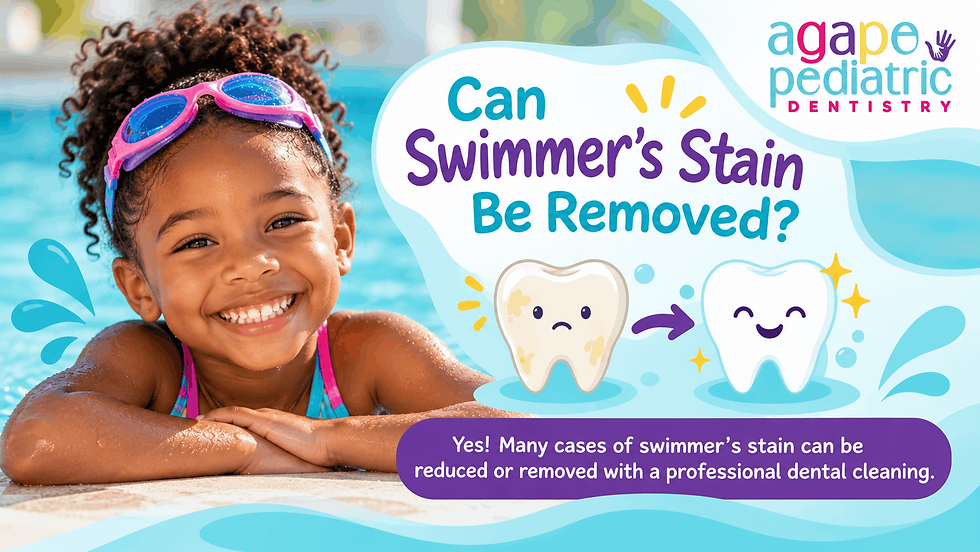
Can Swimmer's Stain Be Removed?
Yes. Many cases of swimmer's stain involve surface deposits that can be reduced or removed through professional dental cleaning.
Depending on the type and severity of the buildup, a pediatric dental professional may recommend removing hardened deposits, polishing the teeth, or using other appropriate cleaning methods.
However, removing surface stains does not reverse enamel erosion.
If the enamel has been affected, your child's dentist may recommend additional protective care, such as fluoride treatment or other individualized approaches.
Trying to scrape stains off at home or using abrasive DIY whitening treatments may damage the teeth or gums.
The safest approach is to have the discoloration evaluated before attempting to remove it.
When Should You Take Your Child to the Dentist for Swimming-Related Stains?
Not every change in tooth color requires urgent treatment, but unexplained discoloration deserves attention.
Consider scheduling a pediatric dental visit if:
Your child develops noticeable yellow, brown, or green discoloration
Stains remain despite regular brushing
Teeth appear rough, dull, or unusually sensitive
Your child swims competitively and spends many hours in pool water
You are unsure whether the discoloration is staining, tartar, or an enamel concern
If your child experiences significant tooth pain or new sensitivity, don't wait for the next routine cleaning to ask for an evaluation.
Frequently Asked Questions About Swimmer's Stain
Can swimming pools really turn teeth yellow or brown?
Yes. Frequent exposure to chemically treated swimming pool water has been associated with yellowish-brown and dark-brown deposits on teeth, particularly among competitive swimmers. However, tooth discoloration can have many causes, so a dental examination is recommended.
Is swimmer's stain permanent?
Surface staining is often removable with professional dental care. However, if swimming-related exposure has contributed to enamel erosion, the lost enamel cannot grow back naturally. A dentist can distinguish between these conditions.
Does chlorine itself damage teeth?
Chlorine is an important swimming pool disinfectant. Properly maintained pools are not expected to routinely cause enamel damage. Problems are more likely when pool chemistry is poorly controlled or when exposure is prolonged under unfavorable water conditions.
Are children on swim teams more likely to develop swimmer's stain?
Children and teens who swim frequently may have greater exposure to pool water and therefore more opportunities for staining. Research has identified tooth discoloration among competitive swimmers, but individual risk varies.
Should my child brush immediately after swimming?
There's generally no need to brush immediately after leaving the pool. Rinsing with fresh water is a practical first step. If your child has been exposed to unusually acidic water, avoid brushing right away and ask your dentist for guidance.
Can a pediatric dental cleaning remove chlorine stains?
Many surface stains and hardened deposits can be removed during a professional cleaning. The appropriate treatment depends on the type of staining and the condition of your child's teeth.
Keep Your Child's Smile Healthy, In and Out of the Pool
Swimming offers wonderful physical and social benefits for children, and concerns about swimmer's stain shouldn't discourage families from enjoying the water.
With good daily brushing habits, proper hydration, well-maintained swimming pools, and regular dental visits, you can help protect your child's smile through every swim season.
If you've noticed stains on your child's teeth or have questions about the effects of swimming on dental health, we're happy to help.
At Agape Pediatric Dentistry in Peachtree Corners, GA, Dr. Gia S. Grannum (Dr. G), a Board-Certified Pediatric Dentist, provides gentle, personalized dental care for babies, children, and teens.
We welcome families from Peachtree Corners, Norcross, Johns Creek, Duluth, and surrounding communities.
Concerned About Stains on Your Child's Teeth?
Schedule a visit with Dr. G to learn what's causing the discoloration and how to keep your child's teeth healthy.
Request a Pediatric Dental Appointment or call 678-831-5437.
Agape Pediatric Dentistry5185 Peachtree Pkwy, Suite 325Peachtree Corners, GA 30092Located above Trader Joe's at The Forum at Peachtree Corners.
This article provides general educational information and is not a substitute for an individualized dental examination or professional medical advice.


